There was a moment of panic among cafe racer purists when Royal Enfield unveiled the track-focused Continental GT-R 750 at EICMA 2025. Had the days of the beloved 650 twin finally been numbered? Would the more accessible cafe racer that sparked a middleweight revolution be quietly pensioned off?
Turns out, the rumours of its death have been greatly exaggerated. The 648cc parallel-twin that taught a generation of riders what knee-down dreams look like isn’t just surviving—it’s getting a thoughtful mid-cycle refresh that addresses the niggles owners have whispered about for years .
Why Kill a Cash Cow When It’s Still Grazing?
Let’s talk numbers, because they tell a story that sentiment alone cannot. Royal Enfield didn’t just have a good 2025; they had a historic one. Crossing the million domestic sales mark for the first time in a calendar year sends a clear message, and the 650 Twins were right at the heart of that party .
Consider this: in January 2025 alone, the Interceptor and GT combined shifted 3,130 units. That’s a 72.5 per cent jump from the previous month and a 32.6 per cent year-on-year increase. By September, the 650 platform was still growing at over 48 per cent compared to the same month in 2024 . These aren’t the numbers of a dying platform. They’re the metrics of a motorcycle that has found its permanent place in the garage—and in the hearts—of riders who want twin-cylinder character without the intimidating price tag or complexity of European exotica.
So, no. The GT 650 isn’t going anywhere. Instead, Royal Enfield is doing something smarter: they’re creating a family.
What’s Actually Changing Under the Skin
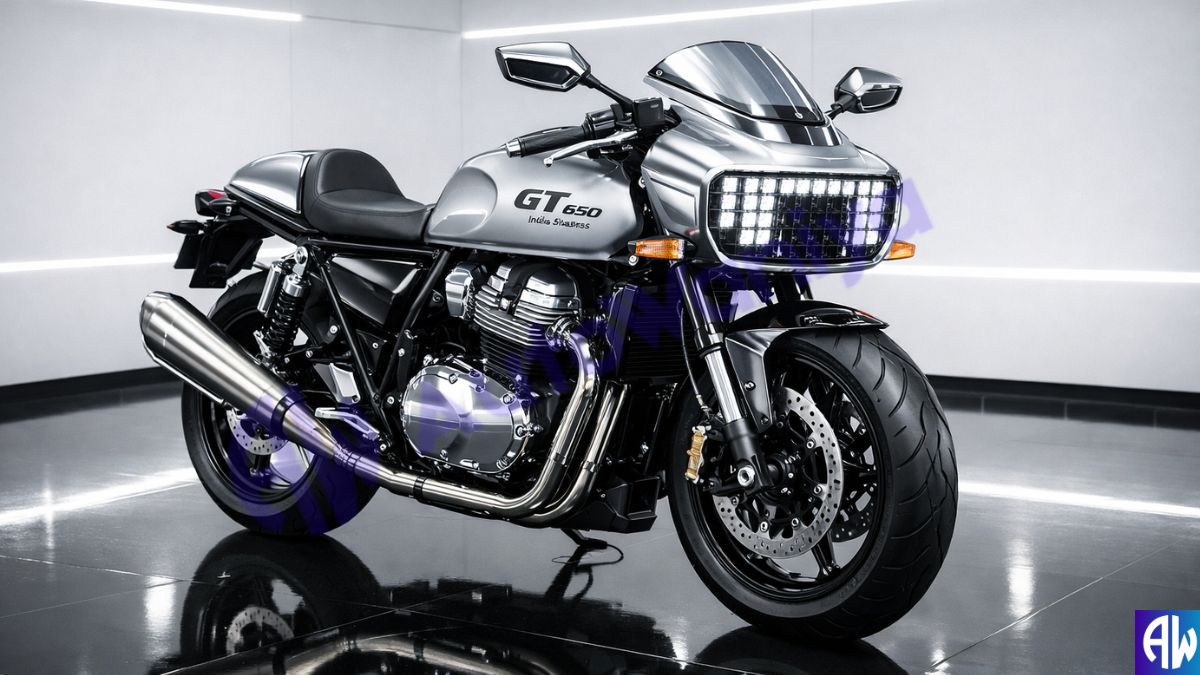
If you were hoping for a ground-up revolution, this might disappoint you. But if you’re the kind of rider who loves the GT 650’s soul but wished it rode a little more plush on your daily commute, the 2026 update is aimed directly at you .
The most significant changes are happening where the rubber meets the road—literally. The suspension, long criticised for being a tad too stiff for Indian roads, is getting re-tuned. Both ends will likely see revised internals, striking that delicate balance between the taut feel a cafe racer demands and the compliance your lower back craves after an hour in the saddle .
Then there’s the braking. Test mules spotted with dual front discs suggest Royal Enfield is listening to the enthusiasts who wanted more bite and stopping power. Whether this makes production or remains a GT 750 exclusive is still unconfirmed, but the whispers are strong enough to raise expectations .
The Little Details That Matter
Royal Enfield has been quietly upgrading its entire lineup with modern essentials, and the GT 650 is finally getting its turn. An LED headlamp—that simple upgrade that transforms night rides from a guessing game into actual visibility—is expected to become standard. The switchgear might feel more premium too, borrowing bits from the newer 650 siblings like the Bear and the Shotgun .
Cosmetically, don’t expect the silhouette to change. Those low-slung clip-ons, the sculpted tank you can hug with your knees, and that perfectly proportioned tail section are staying exactly where they belong. What will change are the colours and graphics—fresh paint to keep the showroom appeal alive without messing with a winning formula .
The Price Question
Here’s where it gets interesting. The current GT 650 sits roughly between ₹3.19 lakh and ₹3.45 lakh. With new hardware and features, a price hike is inevitable—probably nudging it toward the ₹3.30–3.50 lakh range .
But here’s the genius of Royal Enfield’s strategy. The upcoming GT 750, expected around November 2026, will likely command prices touching ₹3.80 lakh or more. That leaves the updated 650 sitting pretty as the accessible entry point, while the 750 becomes the aspirational upgrade. Whether you have three lakhs or four, you stay in the family .
What the Fans Are Saying
Walk into any Royal Enfield owners’ meet, and you’ll hear the same conversation. The GT 650 owners love their bikes with a passion that borders on irrational. They’ll tell you about the way the air-cooled twin pulses beneath them, the mechanical honesty of a motorcycle that doesn’t hide behind electronics, and the sheer theatre of the experience.
But they’ll also admit—usually after a second cup of chai—that the rear shocks could be better and that riding at night feels like a gamble. The 2026 updates address exactly these points. It’s as if Royal Enfield has been reading the forum threads and quietly ticking boxes .
Looking at the Bigger Picture
The 2026 update isn’t happening in isolation. This is the year Royal Enfield goes from being a one-platform wonder to a full-fledged motorcycle empire. The Bullet 650 is expected in February, followed by the Scrambler 450 in March. The electric Flying Flea C6 arrives mid-year, and then the fireworks begin .
By the time the updated GT 650 rolls into showrooms late in the year, it will join a lineup that includes not just its 750cc sibling but also the Himalayan 750. For a company that was once defined by a single 350cc bulletproof engine, this represents a staggering transformation.
The Verdict
The Continental GT 650 has always been more than the sum of its specs. On paper, 47 horsepower and 212 kilograms don’t sound revolutionary. But numbers have never told the full story with this bike. It’s the way the parallel-twin sings as you chase the redline. It’s the riding position that makes every journey feel like you’re heading to a race meet, even if it’s just the local café.
The 2026 update doesn’t try to reinvent that magic. It simply polishes the rough edges—literally smoothing out the ride and brightening the road ahead. In an era where motorcycles are becoming increasingly digital and disconnected, Royal Enfield’s decision to refine rather than replace feels almost radical.
For those who’ve always wanted a GT 650 but waited for the perfect moment, late 2026 might just be it. The cafe racer isn’t dying. It’s growing up.