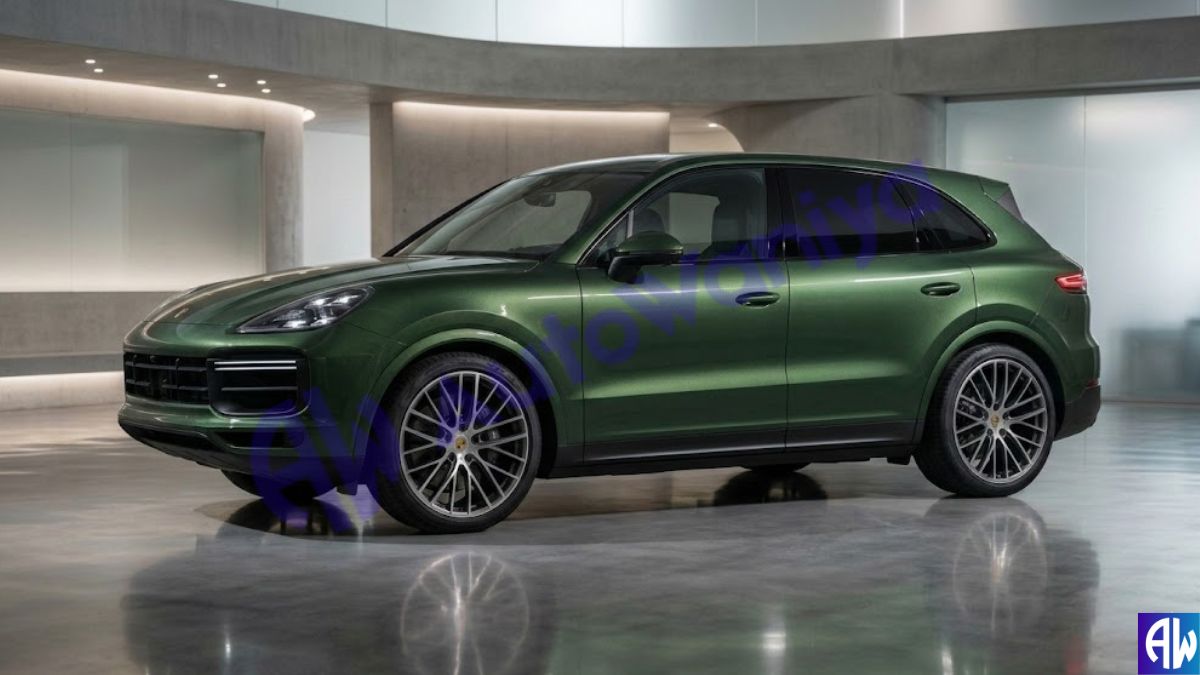
Porsche is rewriting the rulebook for its future flagship. The highly anticipated new SUV, known internally by its codename K1, was originally slated to be a bold, electric-only statement. But in a dramatic strategic shift, Porsche has changed course.
According to a new report from Autocar via CarExpert, the K1 will now be offered with a choice of powerful V6 and V8 engines, including plug-in hybrids, alongside an all-electric version. This makes it a versatile three-powertrain flagship, designed to appeal to a global audience with varying demands and charging infrastructures.
Scheduled for a tentative launch in 2028, this will be Porsche’s largest and most spacious SUV yet, available with seven seats for the first time. It’s a direct response to changing market conditions, delays in next-gen EV platforms, and a clear signal that Porsche is listening to what its customers want, right now.
Let’s dive into everything we know about this fascinating new contender.
A Change of Heart: Why the K1 Went from EV-Only to Multi-Powertrain
When Porsche first confirmed the K1 in 2023, it was promised as an electric-only model riding on the advanced SSP Sport platform. It was meant to be a technological halo for the brand’s electric future. So, what changed?
Several factors forced Porsche to rethink its strategy:
- Platform Delays: In September 2025, Porsche announced it was halting development of the SSP Sport platform, pushing its arrival “well into the 2030s.” The K1 couldn’t wait that long.
- Slowing EV Demand: Porsche CEO Oliver Blume explicitly cited “a clear drop in demand for exclusive battery-electric cars” as a key reason for the pivot. Customers in key markets still want the option of advanced combustion and hybrid power.
- Economic Pressures: Porsche has faced challenges including US tariffs, declining demand in China, and rising development costs. Sharing a platform with Audi makes sound financial sense.
The solution? Partner with Audi and utilise the Premium Platform Combustion (PPC) architecture, which will also underpin the upcoming Audi Q9. This allows Porsche to bring the K1 to market faster, with a mix of powertrains, while still developing a dedicated electric version for later in the decade.
Size and Seating: A True Flagship
The K1 will be the largest vehicle Porsche has ever built, designed to go head-to-head with luxury SUV heavyweights like the BMW X7 and Mercedes-Benz GLS.
- Dimensions: It will be significantly larger than the current Cayenne, offering a commanding presence and truly spacious interior.
- Three Layout Options: In a first for Porsche, the K1 will reportedly be available with seven-seat, five-seat, and four-seat layouts. The four-seat version is likely to be the ultimate luxury configuration, potentially rivalling the opulence of a Bentley Bentayga.
- Global Focus: The K1 is being developed with a keen eye on its primary markets: the US, Middle East, and China—regions where large, powerful SUVs are immensely popular.
Under the Hood: V6, V8, PHEV, and EV Power
This is where the K1 becomes truly unique. It will offer customers an unprecedented choice of powertrains within a single flagship model line.
Combustion and Hybrid Options (PPC Platform):
- A twin-turbo 3.0-litre V6 engine, almost certainly with a plug-in hybrid variant.
- A mighty twin-turbo 4.0-litre V8 engine, also expected to be available as a high-performance plug-in hybrid (similar to the Cayenne Turbo E-Hybrid).
These engines will be shared in concept with the current Cayenne but tuned for the K1’s larger, more luxurious role.
Electric Option (Dedicated EV Platform):
An all-electric version will still be launched, but it will arrive later and ride on a different, dedicated electric architecture. This EV will slot in above the upcoming Macan Electric and Cayenne Electric, creating a trio of electric SUVs for Porsche.
Porsche’s Expanded SUV Lineup
The K1’s introduction will give Porsche one of the most comprehensive SUV lineups in the luxury segment:
- New Mid-size SUV (codenamed M1): A PPC-based replacement for the old petrol Macan.
- Cayenne: The long-standing favourite, continuing with combustion and hybrid power.
- Cayenne Electric: An all-electric version of the Cayenne on the Premium Platform Electric (PPE).
- Macan Electric: The current all-electric Macan on the PPE platform.
- K1 Flagship: The new king of the hill, offering a choice of petrol, hybrid, and electric power.
Production and Launch Timeline
To manage costs, the K1 will be built alongside the Audi Q9 at a factory in Slovakia, moving production out of high-cost Germany. The current timeline points to an Audi Q9 launch in 2027, followed by the Porsche K1 in 2028.
The Final Verdict: A Smart, Flexible Flagship for Uncertain Times
The evolution of the Porsche K1 from a single-minded electric halo to a flexible, multi-powertrain flagship is a masterclass in automotive strategy. It acknowledges that the future of luxury mobility isn’t one-size-fits-all.
By offering V6, V8, plug-in hybrid, and pure electric power in its largest and most luxurious SUV, Porsche is future-proofing its flagship. It can cater to customers in markets with mature EV infrastructure, as well as those in regions where high-performance combustion engines remain the preference.
The K1 promises to be a true technological tour de force, blending Porsche’s legendary driving dynamics with the space, luxury, and versatility of a seven-seat SUV. It’s a bold statement that the flagship of the future doesn’t have to pick just one side—it can offer the best of all worlds.
If you’re in the market for the ultimate luxury SUV and are willing to wait for something truly special, the Porsche K1 should be at the very top of your watchlist. It’s shaping up to be the most versatile and powerful flagship Stuttgart has ever built.