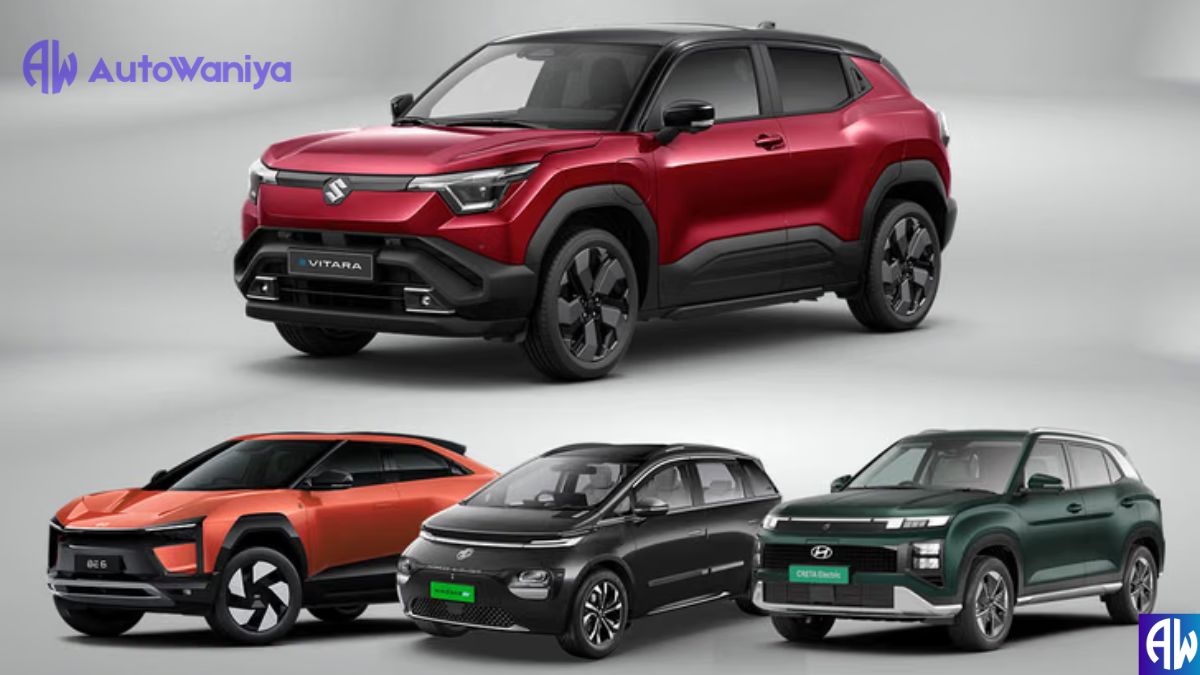
Maruti Suzuki has finally entered the electric arena, and it’s not here to just participate—it’s here to disrupt. With the launch of the e Vitara, the country’s largest carmaker has thrown a massive pricing curveball that has sent shockwaves through the mid-size EV segment. But beneath the headline-grabbing ₹10.99 lakh starting price lies a complex story of battery subscriptions, feature trade-offs, and a showdown with some of the most compelling electric SUVs India has ever seen. Let’s cut through the noise and see how Maruti’s first born-electric stacks up against the competition.
The Grand Entry: Maruti’s Masterstroke
For years, the question lingered: when will Maruti Suzuki, the company that sells every second car in India, launch an electric vehicle? The wait ended on February 17, 2026, with the e Vitara rolling into Nexa showrooms nationwide . But the real headline wasn’t just the car—it was the audacious pricing strategy.
Maruti has introduced the e Vitara with a Battery-as-a-Service (BaaS) model, effectively splitting the cost of the car from its most expensive component. This allows the company to quote an introductory price of ₹10.99 lakh (ex-showroom) for the base Delta variant, which comes with a 49kWh battery pack . However, there’s a catch that every buyer needs to understand: this price excludes the battery. You’ll pay a separate usage charge of ₹3.99 per kilometre for the battery, calculated based on your daily running .
For those who prefer traditional ownership, the e Vitara is also available with the battery included. In that case, prices start at ₹15.99 lakh for the Delta 49kWh variant and go up to ₹20.01 lakh for the top-spec Alpha 61kWh dual-tone .
Under the Skin: What the e Vitara Offers
The e Vitara is built on a dedicated HEARTECT-e platform developed specifically for electric vehicles . It’s offered with two battery packs:
- 49kWh pack: Produces 142 bhp, delivers a claimed ARAI range of 440 km, and is available only in the Delta trim .
- 61kWh pack: Produces 172 bhp, delivers an impressive 543 km range, and powers the Zeta and Alpha variants .
Both are front-wheel-drive configurations with 189 Nm of torque . Charging via a 7.4kW AC home charger takes about 6.5 hours for the smaller pack and 9 hours for the larger one. On a 70kW DC fast charger, you can top up from 10 to 80 percent in roughly 45 minutes .
Feature highlights include dual 10-inch screens, ventilated front seats, a fixed glass sunroof, a 360-degree camera, and Level 2 ADAS on the top variant . Maruti is also sweetening the deal with a complimentary home charger installation, one year of free charging, and an assured 60 percent buyback after three years under the NEXA Edge programme .
The Rivalry: How the Competition Stacks Up
Now, let’s put the e Vitara in the ring with its fiercest competitors. This is where the battle gets real.
MG Windsor EV: The BaaS Pioneer
The MG Windsor EV is the one that started the battery subscription trend in India, and it remains the e Vitara’s most direct rival . Under BaaS, the Windsor is actually cheaper, priced from ₹9.99 lakh to ₹13.99 lakh (ex-showroom), with battery rentals ranging from ₹3.9 to ₹4.5 per kilometre .
However, the Windsor’s claimed range tops out at 449 km with its 52.9kWh pack—nearly 100 km less than the e Vitara’s 61kWh version . Where the Windsor fights back is with its sheer value-for-money proposition: a 15.6-inch touchscreen, reclining rear seats, and a panoramic glass roof that gives it a lounge-like feel . It’s the people’s champion for a reason.
Verdict: Choose Windsor for maximum affordability and quirky spaciousness. Choose e Vitara if you need that extra range.
Hyundai Creta Electric: The Familiar Face
Hyundai’s Creta Electric leverages the immense popularity of its internal combustion sibling. Priced from ₹17.99 lakh to ₹24.70 lakh (ex-showroom), it is significantly more expensive than the e Vitara’s BaaS pricing and even undercuts it in the traditional ownership model at the lower end .
The Creta offers 42kWh and 51.4kWh battery packs with ranges of 420 km and 510 km respectively . It’s not built on a dedicated EV platform—it’s an adaptation—but it compensates with a more premium cabin, a longer features list (including a panoramic sunroof and V2L functionality), and that trusted Creta badge .
Verdict: If your budget allows and you crave the familiarity of India’s favourite SUV nameplate with a comprehensive feature set, the Creta Electric is tempting. The e Vitara wins on pure value and range-per-rupee.
Tata Curvv EV: The Coupe Stylist
The Tata Curvv EV brings SUV-coupe drama to the segment. Prices range from ₹17.49 lakh to ₹22.24 lakh (ex-showroom), positioning it above the e Vitara . It offers 45kWh and 55kWh packs with claimed ranges of 430 km and 502 km .
The Curvv’s long-range version actually exceeds the e Vitara’s 49kWh range, offering 583km on a single charge—over 40km more than the Maruti’s top-end 61kWh variant . It also boasts a 5-star Bharat NCAP safety rating and a striking design that turns heads .
Verdict: The Curvv is for the style-conscious buyer who prioritises safety ratings and coupe aesthetics. The e Vitara is the more practical, wallet-friendly option.
Mahindra BE 6: The Range King
If range anxiety is your biggest concern, the Mahindra BE 6 is the segment’s undisputed champion. Priced from ₹18.90 lakh to ₹27.65 lakh (ex-showroom), it’s the most expensive here, but you get what you pay for .
With massive 59kWh and 79kWh battery packs, the BE 6 delivers claimed ranges of 557 km and a staggering 683 km—far exceeding anything the e Vitara can offer . It’s also the only rear-wheel-drive SUV in this comparison, appealing to driving enthusiasts who want performance along with electric efficiency .
Verdict: The BE 6 is for highway warriors and those who want the absolute maximum range with a sporty edge. The e Vitara is for city dwellers and first-time EV buyers looking for an accessible entry point.
Expert Analysis: Maruti’s Calculated Gamble
Maruti Suzuki has played a clever game with the e Vitara. By introducing the BaaS model at an aggressive sub-₹11 lakh price point, it has effectively lowered the psychological barrier to EV ownership . For a family upgrading from a compact petrol car, the e Vitara suddenly seems within reach.
But the strategy isn’t without risks. The BaaS model adds a layer of complexity—customers must understand that they’re signing up for a perpetual usage fee, which could make the car more expensive in the long run if they drive extensively . Moreover, the entry-level Delta variant misses out on popular features like ADAS, ventilated seats, and even a rear parking camera, which might push buyers toward higher trims—or toward rivals .
The sweet spot appears to be the Zeta and Alpha variants with the 61kWh pack, offering that excellent 543 km range and most of the desirable features. But at ₹17.49 lakh to ₹20.01 lakh (without BaaS), they enter the same price bracket as the Creta Electric and Curvv EV, where the competition is fierce .
Fan Reaction and Market Buzz
On social media and automotive forums, the reaction has been electric—pun intended. Enthusiasts are thrilled to see Maruti finally join the EV party, and many are praising the BaaS model for making electric mobility accessible. “Finally, a Maruti EV that doesn’t break the bank,” reads a typical comment on X.
However, there’s also confusion. Several potential buyers are asking the same question: “Is ₹10.99 lakh the real price, or is there a catch?” Dealerships report a surge in inquiries, with customers eager to understand how the per-kilometre battery rental works in practice.
What Happens Next: The Road Ahead
The e Vitara’s launch is just the beginning. Maruti has confirmed that this is the first of many EVs to come on the HEARTECT-e platform . With production already underway at its Gujarat facility, the company is targeting both domestic sales and exports .
For consumers, this means one thing: choice. The mid-size EV segment is no longer a niche—it’s a bustling marketplace with options for every budget and need. The Windsor offers value, the Creta offers familiarity, the Curvv offers style, the BE 6 offers range, and now the e Vitara offers Maruti’s unparalleled reach and trust factor.
Over the next few months, expect test drive reviews, real-world range tests, and ownership experiences to pour in. That’s when we’ll truly know if the e Vitara can replicate the success of its petrol siblings in the electric world.
Conclusion
The Maruti Suzuki e Vitara is a landmark moment for India’s EV story. It brings the country’s largest carmaker into the fold with a product that’s competitive on range, aggressive on pricing (especially with BaaS), and backed by the reassurance of Maruti’s service network.
It may not be the absolute best in every single parameter—the BE 6 offers more range, the Windsor offers lower entry pricing, and the Creta offers more features. But as a complete package that balances affordability, range, and brand trust, the e Vitara has just raised the stakes for everyone. The electric battle has truly begun.