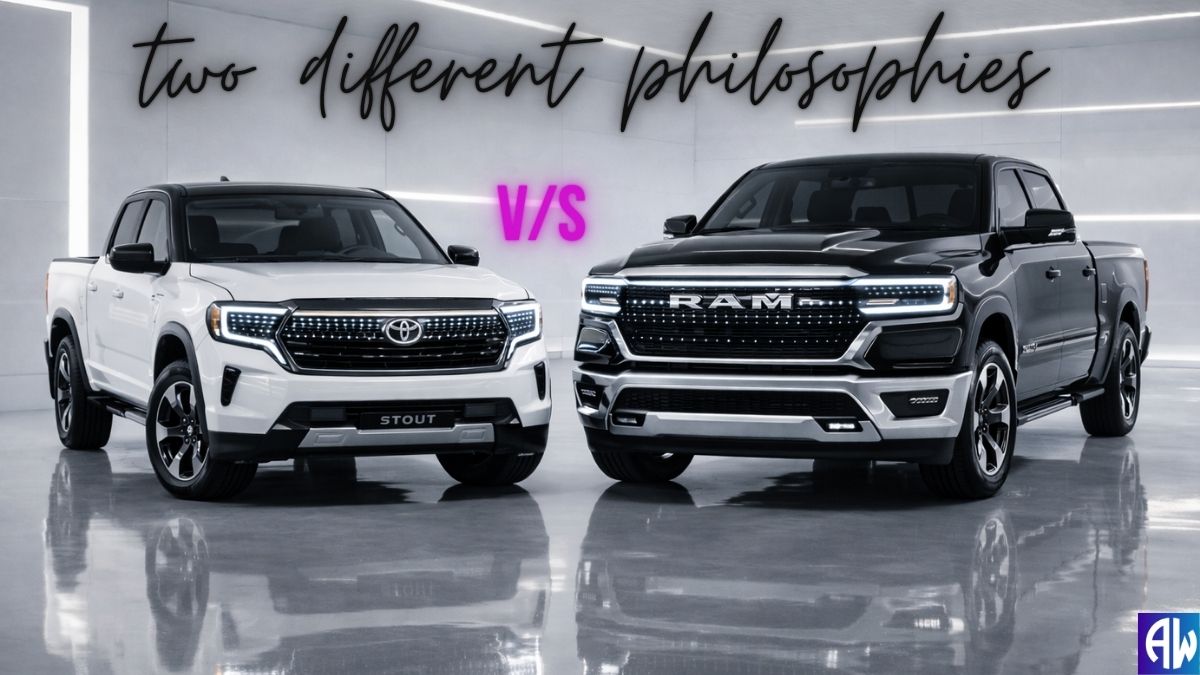
Pickup buyers in 2026 are facing an interesting choice. Manufacturers are not only improving traditional full-size trucks, but also reviving compact and mid-size models aimed at practicality and efficiency.
Two vehicles creating very different kinds of buzz are the Toyota Stout 2026 and the Dodge Ram 1500 2026.
At first glance they may appear to compete, but in reality they serve completely different expectations. One focuses on affordability, maneuverability, and everyday utility. The other is built around power, scale, and premium comfort.
If you are confused about which one deserves your money, this detailed breakdown will make the decision easier.
Understanding the Basic Difference
Before diving into features, it is important to understand their categories.
- Toyota Stout returns as a compact or lifestyle utility pickup.
- Ram 1500 continues as a full-size heavy-capability truck.
This single distinction influences design, engines, comfort levels, price, and long-term ownership costs.
Design Philosophy: Practical vs Commanding
Toyota Stout 2026
The Stout follows a straightforward, functional design language. Expect a durable body, usable cargo bed, and proportions that are easy to manage in city traffic or tight job sites. The focus is more on getting work done efficiently rather than making a luxury statement.
Dodge Ram 1500 2026
The Ram is bold and imposing. Its larger dimensions, strong front styling, and muscular stance are meant to convey authority. Higher trims especially lean toward a premium presence, appealing to buyers who want both utility and visual impact.
Engine Options and Performance Character
Toyota Stout
Toyota is expected to prioritize reliability and fuel efficiency. Powertrains may include proven petrol engines and possibly electrified or hybrid options depending on the market. Performance will likely be tuned for daily usability, moderate loads, and long-term durability.
Ram 1500
The Ram offers multiple powerful choices, including advanced turbocharged units and traditional larger engines. These are designed to deliver high torque, strong acceleration, and confident performance while towing or carrying heavy payloads.
In simple terms, the Ram is built for demanding tasks, while the Stout is optimized for sensible everyday operation.
Towing and Payload: A Major Divider
This is where the difference becomes dramatic.
Toyota Stout
Suitable for tools, small trailers, farm supplies, or recreational gear. Perfect for buyers who need utility without extreme numbers.
Ram 1500
Engineered for serious capability. When properly configured, it can tow large trailers, boats, and equipment that would be unrealistic for compact pickups.
If maximum strength is essential, the Ram stands far ahead.
Interior Experience and Comfort Level
Inside the Toyota Stout
The cabin is expected to be modern yet practical. Durable materials, intuitive controls, and essential infotainment features will dominate. It is comfortable, but luxury is not the primary aim.
Inside the Ram 1500
The Ram has earned a reputation for offering one of the most refined interiors in the segment. Large displays, premium finishes, advanced connectivity, and available high-end seating options make it feel closer to a premium SUV.
Buyers who spend long hours on highways may appreciate the Ram’s extra refinement.
Technology and Convenience
Both trucks are likely to include smartphone connectivity, digital displays, and modern infotainment systems.
However, the Ram generally provides more advanced options, larger screens, and additional driver-assistance integrations, particularly in higher trims.
The Stout keeps things simpler and easier to maintain.
Safety Features
Toyota traditionally emphasizes comprehensive safety suites, so the Stout should include essentials such as:
- Pre-collision systems
- Lane support features
- Adaptive cruise capability
The Ram matches these and can go further with more complex systems, especially those designed to assist during towing.
Price Positioning and Ownership Outlook
Toyota Stout
Aims to be affordable and economical. Lower purchase price, better fuel efficiency, and potentially lower maintenance costs make it attractive for small businesses and budget-focused households.
Ram 1500
Commands a higher price but offers greater performance, larger size, and premium features. It suits buyers who want capability plus comfort and are prepared for higher running costs.
Which One Makes More Sense for Most People?
For urban users, small contractors, and families wanting occasional cargo flexibility, the Stout may provide everything required without unnecessary expense.
For buyers who regularly tow, travel long distances, or want luxury combined with power, the Ram 1500 becomes the stronger candidate.
Neither is universally better. The correct choice depends entirely on how you plan to use the truck.
Final Thoughts
The interesting part about comparing the Toyota Stout 2026 and the Dodge Ram 1500 2026 is that they represent two different philosophies of pickup ownership.
The Stout focuses on smart efficiency, manageable size, and value.
The Ram delivers scale, strength, and a premium environment.
Understanding your real needs will quickly reveal which one is the smarter investment.
Disclaimer
This article is based on publicly available information, early reports, and industry expectations at the time of writing. Final specifications, pricing, feature availability, and configurations may vary depending on region and official manufacturer announcements. Readers should confirm details with authorized dealerships before making any purchase decision.